1. Start with a Thoughtful Design Plan
Before buying furniture or décor, assess what your area actually requires. Working with experienced interior decorators can also help you plan layouts, select suitable materials, and avoid unnecessary purchases. A detailed plan helps you avoid wasteful purchases and choose pieces that serve multiple functions. Measure each room, set a realistic budget, and consider how you’ll use the space. Choose timeless designs over trends that may quickly become outdated. A well-planned room lasts longer and requires fewer replacements.
2. Choose Sustainable Materials
One of the simplest methods to adopt eco-friendly interior design is to choose responsible materials. Look for furniture produced from certified wood, reclaimed lumber, bamboo, cork, or recycled materials. When properly sourced and manufactured, these solutions can reduce demand for natural resources. Natural stone, recycled glass, and clay may all lend texture and character to a space.
Always enquire about a product’s origin, manufacturing process, and whether it is repairable or recyclable. Durable materials may cost more upfront, but their long life can provide better value and generate less waste over time.
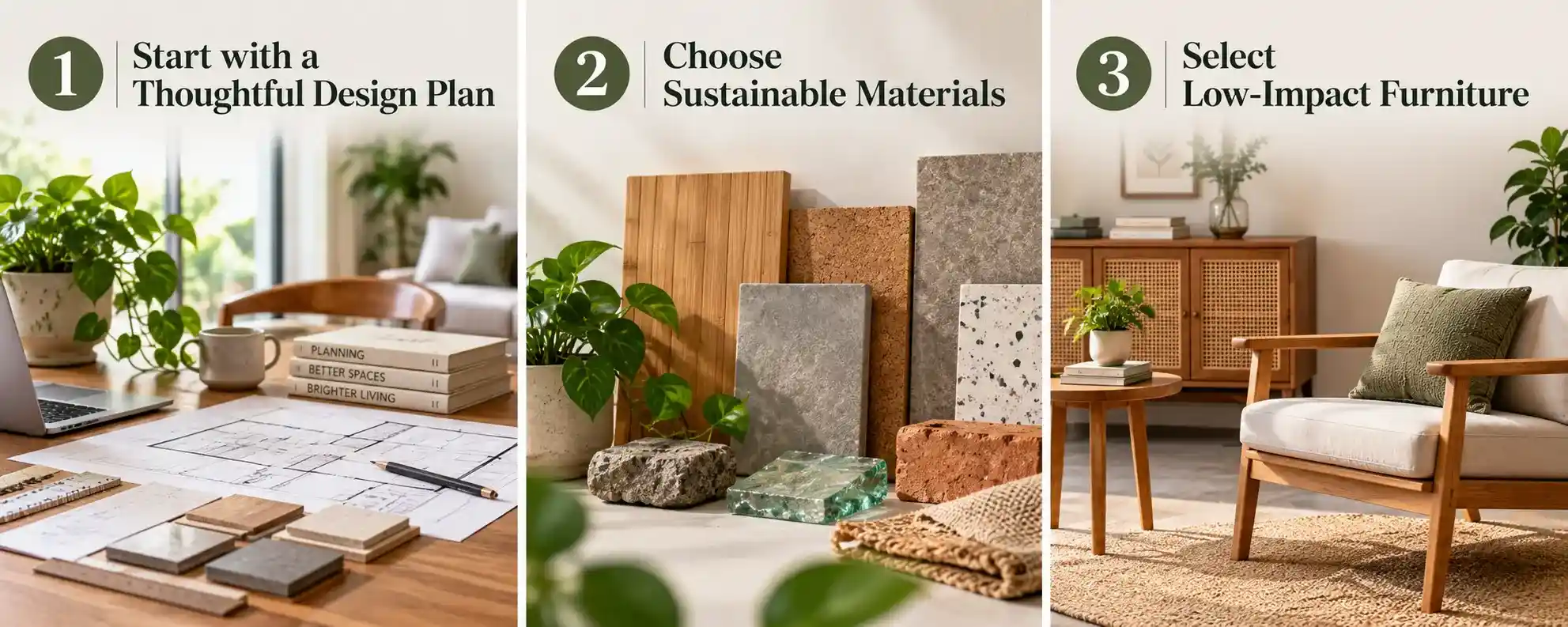
3. Select Low-Impact Furniture
Furniture significantly affects a room’s appearance and environmental footprint. Choose robust, well-made pieces that will last for years. Second-hand furniture, vintage treasures, and refurbished goods are excellent options for extending the life of existing things. Reupholstering an old chair or repainting a wooden table can refresh its appearance without sending it to the landfill.
When buying new furniture, avoid products with excessive packing or materials that emit strong chemical odours. Choose suppliers who provide detailed information about their materials and manufacturing processes.
4. Use Eco-Friendly Interior Paint
Paint can transform a room, but some paints emit volatile organic compounds (VOCs) into the air. These substances may affect indoor air quality. Choose eco-friendly interior paint with low or no VOC content to make your home healthier. Water-based paints are generally a practical choice because they emit fewer harsh smells and are easier to clean up.
Use soft, light colours to make rooms feel more spacious and bright. Lighter walls can also help reflect natural light, reducing the need for artificial lighting during the day. When painting, always follow the manufacturer’s directions and keep the area well ventilated.
5. Improve Natural Light and Ventilation
Good eco-friendly interior design uses natural resources efficiently. Arrange furniture so windows can stay open, and sunlight can enter the room. Spread daylight by using lightweight drapes, mirrors, and reflective surfaces. Open windows when the weather permits to promote airflow and reduce reliance on cooling systems.
Ceiling fans, cross-ventilation, and breathable textiles can help you stay comfortable while conserving electricity. If you need privacy, choose curtains or blinds made from long-lasting natural or recycled fibres.
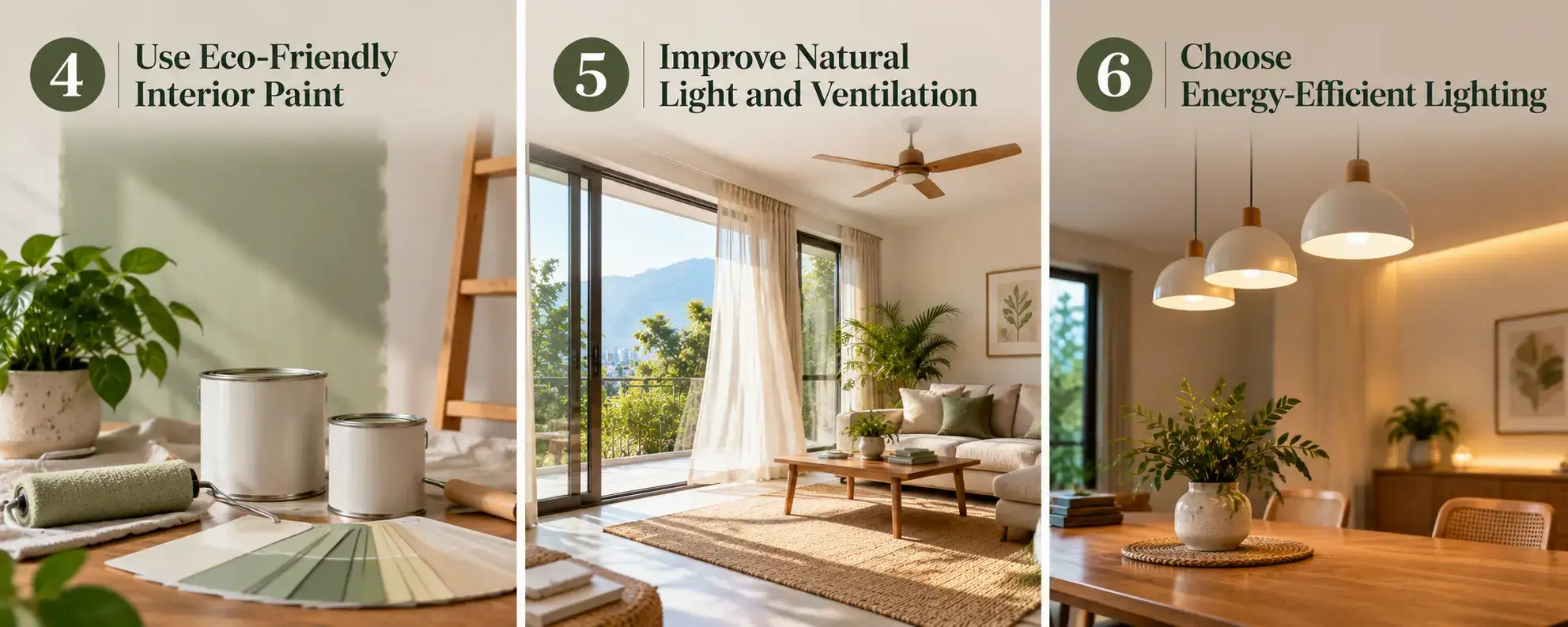
6. Choose Energy-Efficient Lighting
Replace outdated bulbs with energy-saving LED lighting. LEDs utilise less electricity, last longer, and come in a variety of colours and styles. Instead of illuminating the entire space, use task lighting as needed. Install dimmer switches or smart controllers to change light and save energy.
Decorative lamps can provide warmth, but choose models with replacement bulbs and long-lasting materials. When rooms are unoccupied, turn off the lights, and whenever possible, use natural light as your primary lighting source.
7. Bring Nature Indoors
Plants can make an apartment feel fresher, more tranquil, and more connected to nature. Choose indoor plants that suit your room’s lighting and humidity levels. Use pots made of terracotta, repurposed materials, or responsibly sourced materials. Choose plants based on compatibility, not just decoration.
Natural textures like jute, linen, cotton, rattan, and wool can also contribute to a relaxing ambience. Choose long-lasting, washable items free of unnecessary chemical treatments.
8. Invest in Eco-Friendly Interior Materials
Small purchases can help create a greener house. Look for environmentally friendly interior products like recycled rugs, reusable storage baskets, refillable cleaning containers, organic textiles, and responsibly sourced décor. Avoid throwaway decorations and choose items you can use in multiple rooms.
Check the product labels carefully. Terms like natural, green, and sustainable may not always specify how an item was made. When deciding, rely on clear information about materials, certifications, durability, and recycling.
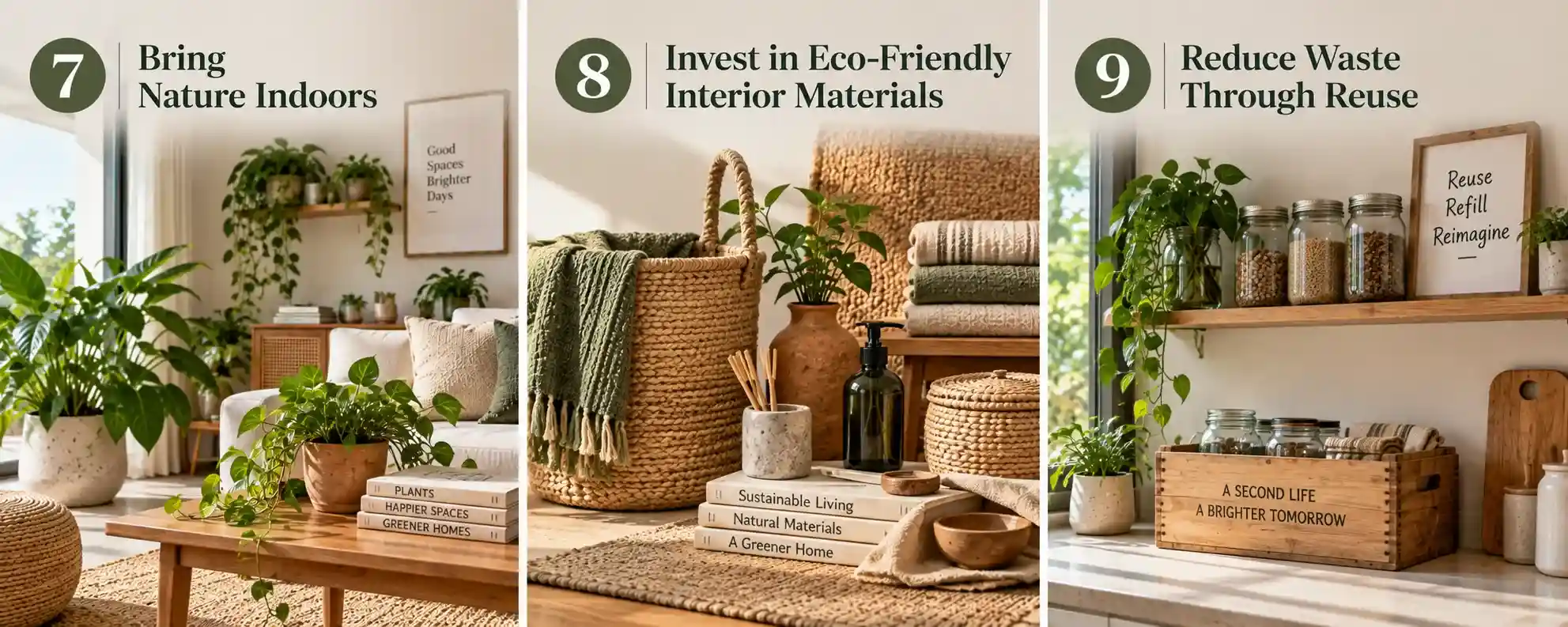
9. Reduce Waste Through Reuse
Reuse is one of the most effective environmentally friendly home design concepts. Repurpose jars as storage containers, make cushion covers from old fabric, or build shelves from spare wood. Instead of throwing away furniture and decor, consider donating it. When renovating, keep recyclable and reusable materials separate.


